The network interface. More...
#include <Network.h>
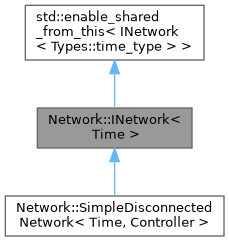
 Inheritance diagram for Network::INetwork< Time >:
 Collaboration diagram for Network::INetwork< Time >: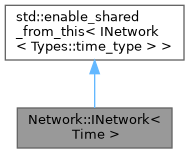
Public Types | |
| using | ExecuteResults = typename Circuits::Circuit< Time >::ExecuteResults |
| using | SimulatorPair = std::pair< Simulators::SimulatorType, Simulators::SimulationType > |
| using | SimulatorsSet = std::unordered_set< SimulatorPair, boost::hash< SimulatorPair > > |
Public Member Functions | |
| virtual | ~INetwork ()=default |
| Destroy the INetwork object. | |
| virtual size_t | GetNumberOfGatesDistributedOrCut (const std::shared_ptr< Circuits::Circuit< Time > > &circuit) const =0 |
| Get the number of gates that span more than one host. | |
| virtual void | Execute (const std::shared_ptr< Circuits::Circuit< Time > > &circuit)=0 |
| Execute the circuit on the network. | |
| virtual void | ExecuteOnHost (const std::shared_ptr< Circuits::Circuit< Time > > &circuit, size_t hostId)=0 |
| Execute the circuit on the specified host. | |
| virtual std::vector< double > | ExecuteExpectations (const std::shared_ptr< Circuits::Circuit< Time > > &circuit, const std::vector< std::string > &paulis)=0 |
| Execute the circuit on the network and return the expectation values for the specified Pauli strings. | |
| virtual std::vector< double > | ExecuteOnHostExpectations (const std::shared_ptr< Circuits::Circuit< Time > > &circuit, size_t hostId, const std::vector< std::string > &paulis)=0 |
| Execute the circuit on the specified host and return the expectation values for the specified Pauli strings. | |
| virtual ExecuteResults | RepeatedExecute (const std::shared_ptr< Circuits::Circuit< Time > > &circuit, size_t shots=1000)=0 |
| Execute the circuit on the network, repeatedly. | |
| ExecuteResults | RepeatedExecuteCircuit (const Schedulers::ExecuteCircuit< Time > &executeCircuit) |
| Execute the circuit on the network, repeatedly. | |
| virtual ExecuteResults | RepeatedExecuteOnHost (const std::shared_ptr< Circuits::Circuit< Time > > &circuit, size_t hostId, size_t shots=1000)=0 |
| Execute the circuit on the specified host, repeatedly. | |
| ExecuteResults | RepeatedExecuteCircuitOnHost (const Schedulers::ExecuteCircuit< Time > &executeCircuit, size_t hostId) |
| Execute the circuit on the specified host, repeatedly. | |
| virtual std::vector< ExecuteResults > | ExecuteScheduled (const std::vector< Schedulers::ExecuteCircuit< Time > > &circuits)=0 |
| Schedule and execute circuits on the network. | |
| virtual void | CreateSimulator (Simulators::SimulatorType simType=Simulators::SimulatorType::kQCSim, Simulators::SimulationType simExecType=Simulators::SimulationType::kMatrixProductState, size_t nrQubits=0)=0 |
| Create the simulator for the network. | |
| virtual std::shared_ptr< Simulators::ISimulator > | GetSimulator () const =0 |
| Get the simulator for the network. | |
| virtual void | Configure (const char *key, const char *value)=0 |
| Configures the network. | |
| virtual void | CreateScheduler (SchedulerType schType=SchedulerType::kNoEntanglementQubitsParallel)=0 |
| Create the scheduler for the network. | |
| virtual std::shared_ptr< Schedulers::IScheduler< Time > > | GetScheduler () const =0 |
| Get the scheduler for the network. | |
| virtual const std::shared_ptr< IHost< Time > > | GetHost (size_t hostId) const =0 |
| Get the host with the specified id. | |
| virtual const std::shared_ptr< IController< Time > > | GetController () const =0 |
| Get the controller for the network. | |
| virtual Circuits::OperationState & | GetState ()=0 |
| Get the classical state of the network. | |
| virtual size_t | GetNumHosts () const =0 |
| Get the number of hosts in the network. | |
| virtual size_t | GetNumQubits () const =0 |
| Get the number of qubits in the network. | |
| virtual size_t | GetNumQubitsForHost (size_t hostId) const =0 |
| Get the number of qubits in the network for the specified host. | |
| virtual size_t | GetNumNetworkEntangledQubits () const =0 |
| Get the number of qubits used for entanglement between hosts. | |
| virtual size_t | GetNumNetworkEntangledQubitsForHost (size_t hostId) const =0 |
| Get the number of qubits used for entanglement between hosts for the specified host. | |
| virtual size_t | GetNumClassicalBits () const =0 |
| Get the number of classical bits in the network. | |
| virtual size_t | GetNumClassicalBitsForHost (size_t hostId) const =0 |
| Get the number of classical bits in the network for the specified host. | |
| virtual bool | AreQubitsOnSameHost (size_t qubitId1, size_t qubitId2) const =0 |
| Check if the specified qubits are on the same host. | |
| virtual bool | AreClassicalBitsOnSameHost (size_t bitId1, size_t bitId2) const =0 |
| Check if the specified classical bits are on the same host. | |
| virtual bool | AreQubitAndClassicalBitOnSameHost (size_t qubitId, size_t bitId) const =0 |
| Check if the specified qubit and classical bit are on the same host. | |
| virtual size_t | GetHostIdForQubit (size_t qubitId) const =0 |
| Get the host id for the specified qubit. | |
| virtual size_t | GetHostIdForEntangledQubit (size_t qubitId) const =0 |
| Get the host id for the specified qubit used for entanglement between hosts. | |
| virtual size_t | GetHostIdForAnyQubit (size_t qubitId) const =0 |
| Get the host id for the specified qubit. | |
| virtual size_t | GetHostIdForClassicalBit (size_t classicalBitId) const =0 |
| Get the host id for the specified classical bit. | |
| virtual std::vector< size_t > | GetQubitsIds (size_t hostId) const =0 |
| Get the qubit ids for the specified host. | |
| virtual std::vector< size_t > | GetNetworkEntangledQubitsIds (size_t hostId) const =0 |
| Get the qubit ids used for entanglement between hosts for the specified host. | |
| virtual std::vector< size_t > | GetClassicalBitsIds (size_t hostId) const =0 |
| Get the classical bit ids for the specified host. | |
| virtual std::vector< size_t > | GetEntangledQubitMeasurementBitIds (size_t hostId) const =0 |
| Get the classical bit ids used for measurement of entanglement qubits between the hosts for the specified host. | |
| virtual bool | IsNetworkEntangledQubit (size_t qubitId) const =0 |
| Check if the specified qubit id is for a qubit used for entanglement between hosts. | |
| virtual bool | IsLocalOperation (const std::shared_ptr< Circuits::IOperation< Time > > &op) const =0 |
| Check if the circuit operation is local. | |
| virtual bool | IsDistributedOperation (const std::shared_ptr< Circuits::IOperation< Time > > &op) const =0 |
| Check if the circuit operation is distributed. | |
| virtual bool | OperatesWithNetworkEntangledQubit (const std::shared_ptr< Circuits::IOperation< Time > > &op) const =0 |
| Check if the circuit operation operates on the entanglement qubits between hosts. | |
| virtual bool | SendPacket (size_t fromHostId, size_t toHostId, const std::vector< uint8_t > &packet)=0 |
| Sends a packet between two hosts. | |
| virtual bool | IsEntanglingGate (const std::shared_ptr< Circuits::IOperation< Time > > &op) const =0 |
| Checks if a gate is an entangling gate. | |
| virtual bool | ExpectsClassicalBitFromOtherHost (const std::shared_ptr< Circuits::IOperation< Time > > &op) const =0 |
| Checks if a gate expects a classical bit from another host. | |
| virtual size_t | GetHostIdForClassicalControl (const std::shared_ptr< Circuits::IOperation< Time > > &op) const =0 |
| Get the host id where the classical control bit resides for a conditioned gate. | |
| virtual bool | IsEntanglementQubitBusy (size_t qubitId) const =0 |
| Check if the specified qubit used for entanglement between hosts is busy. | |
| virtual bool | AreEntanglementQubitsBusy (size_t qubitId1, size_t qubitId2) const =0 |
| Check if any of the two specified qubits used for entanglement between hosts are busy. | |
| virtual void | MarkEntangledQubitsBusy (size_t qubitId1, size_t qubitId2)=0 |
| Mark the pair of the specified qubits used for entanglement between hosts as busy. | |
| virtual void | MarkEntangledQubitFree (size_t qubitId)=0 |
| Mark the specified qubit used for entanglement between hosts as free. | |
| virtual void | ClearEntanglements ()=0 |
| Clear all entanglements between hosts in the network. | |
| std::shared_ptr< INetwork< Time > > | getptr () |
| Get a shared pointer to this object. | |
| virtual NetworkType | GetType () const =0 |
| Get the type of the network. | |
| virtual std::shared_ptr< INetwork< Time > > | Clone () const =0 |
| Clone the network. | |
| virtual std::shared_ptr< Circuits::Circuit< Time > > | GetDistributedCircuit () const =0 |
| Get the distributed circuit. | |
| virtual void | SetOptimizeSimulator (bool optimize=true)=0 |
| Allows using an optimized simulator. | |
| virtual bool | GetOptimizeSimulator () const =0 |
| Returns the 'optimize' flag. | |
| virtual Simulators::SimulatorType | GetLastSimulatorType () const =0 |
| Get the last used simulator type. | |
| virtual Simulators::SimulationType | GetLastSimulationType () const =0 |
| Get the last used simulation type. | |
| virtual const SimulatorsSet & | GetSimulatorsSet () const =0 |
| Get the optimizations simulators set. | |
| virtual void | AddOptimizationSimulator (Simulators::SimulatorType type, Simulators::SimulationType kind)=0 |
| Adds a simulator to the simulators optimization set. | |
| virtual void | RemoveOptimizationSimulator (Simulators::SimulatorType type, Simulators::SimulationType kind)=0 |
| Removes a simulator from the simulators optimization set. | |
| virtual void | RemoveAllOptimizationSimulatorsAndAdd (Simulators::SimulatorType type, Simulators::SimulationType kind)=0 |
| Removes all simulators from the simulators optimization set and adds the one specified. | |
| virtual bool | OptimizationSimulatorExists (Simulators::SimulatorType type, Simulators::SimulationType kind) const =0 |
| Checks if a simulator exists in the optimization set. | |
| virtual size_t | GetMaxSimulators () const =0 |
| Get the maximum number of simulators that can be used in the network. | |
| virtual void | SetMaxSimulators (size_t maxSimulators)=0 |
| Set the maximum number of simulators that can be used in the network. | |
| virtual std::vector< std::vector< std::string > > | GetSubroutinesTextCode () const |
| Get the text code that is executed on the hosts. | |
| virtual std::shared_ptr< Simulators::ISimulator > | ChooseBestSimulator (const std::shared_ptr< Circuits::Circuit< Time > > &dcirc, size_t &counts, size_t nrQubits, size_t nrCbits, size_t nrResultCbits, Simulators::SimulatorType &simType, Simulators::SimulationType &method, std::vector< bool > &executed, bool multithreading=false, bool dontRunCircuitStart=false) const =0 |
| Choose the best simulator for the given circuit. | |
Detailed Description
class Network::INetwork< Time >
The network interface.
The network interface. Must be derived from by the particular network implementations.
- Template Parameters
-
Time The time type used for execution times.
- See also
- IHost
- IController
Member Typedef Documentation
◆ ExecuteResults
| using Network::INetwork< Time >::ExecuteResults = typename Circuits::Circuit<Time>::ExecuteResults |
◆ SimulatorPair
| using Network::INetwork< Time >::SimulatorPair = std::pair<Simulators::SimulatorType, Simulators::SimulationType> |
◆ SimulatorsSet
| using Network::INetwork< Time >::SimulatorsSet = std::unordered_set<SimulatorPair, boost::hash<SimulatorPair> > |
Constructor & Destructor Documentation
◆ ~INetwork()
|
virtualdefault |
Member Function Documentation
◆ AddOptimizationSimulator()
|
pure virtual |
Adds a simulator to the simulators optimization set.
Adds a simulator (if not already present) to the simulators optimization set.
- Parameters
-
type The type of the simulator to add. kind The kind of the simulation to add.
Implemented in Network::SimpleDisconnectedNetwork< Time, Controller >.
◆ AreClassicalBitsOnSameHost()
|
pure virtual |
Check if the specified classical bits are on the same host.
Check if the specified classical are on the same host. This does not include the classical bits used for measuring the qubits used for entanglement between the hosts.
- Returns
- True if the specified qubits are on the same host, false otherwise.
Implemented in Network::SimpleDisconnectedNetwork< Time, Controller >.
◆ AreEntanglementQubitsBusy()
|
pure virtual |
Check if any of the two specified qubits used for entanglement between hosts are busy.
Check if any of the two specified qubits used for entanglement between hosts are busy. This is used to check if the qubits are free in order to use them for creating an entanglement between hosts.
- Parameters
-
qubitId1 The id of the first qubit to check. qubitId2 The id of the second qubit to check.
- Returns
- True if any of the two specified qubits used for entanglement between hosts are busy, false otherwise.
Implemented in Network::SimpleDisconnectedNetwork< Time, Controller >.
◆ AreQubitAndClassicalBitOnSameHost()
|
pure virtual |
Check if the specified qubit and classical bit are on the same host.
Check if the specified qubit and classical bit are on the same host. This does not include the qubits used for entanglement between the hosts and the classical bits used for their measurement.
- Returns
- True if the specified qubit and classical bit are on the same host, false otherwise.
Implemented in Network::SimpleDisconnectedNetwork< Time, Controller >.
◆ AreQubitsOnSameHost()
|
pure virtual |
Check if the specified qubits are on the same host.
Check if the specified qubits are on the same host. This does not include the qubits used for entanglement between the hosts.
- Returns
- True if the specified qubits are on the same host, false otherwise.
Implemented in Network::SimpleDisconnectedNetwork< Time, Controller >.
◆ ChooseBestSimulator()
|
pure virtual |
Choose the best simulator for the given circuit.
Choose the best simulator for the given circuit, based on the number of qubits, number of classical bits, number of result classical bits and number of shots. The choice is made from the optimization simulators set.
- Parameters
-
dcirc The distributed circuit to choose the simulator for. counts The number of shots to be executed. nrQubits The number of qubits in the circuit. nrCbits The number of classical bits in the circuit. nrResultCbits The number of result classical bits in the circuit. simType The type of the chosen simulator. method The kind of simulation of the chosen simulator. executed A vector of bools marking the executed gates from the circuit (some of them might be executed when picking up the simulator - usually the gates from the beginning up to the measurements/resets). multithreading If true, allows simulators to support multithreading (default is false). Multithreading will be set to false if multithreading is implemented at a higher level (multiple simulators in parallel).
- Returns
- A shared pointer to the chosen simulator.
Implemented in Network::SimpleDisconnectedNetwork< Time, Controller >.
◆ ClearEntanglements()
|
pure virtual |
Clear all entanglements between hosts in the network.
Clear all entanglements between hosts in the network. This marks all qubits used for entanglement between hosts as free. If the entanglements are explicitely coordinated in the network, all pairs of entangled qubits are released.
Implemented in Network::SimpleDisconnectedNetwork< Time, Controller >.
◆ Clone()
|
pure virtual |
Clone the network.
Clone the network in a pristine state.
- Returns
- A shared pointer to the cloned network.
Implemented in Network::SimpleDisconnectedNetwork< Time, Controller >.
◆ Configure()
|
pure virtual |
Configures the network.
This function is called to configure the network (for example the simulator(s) used by the network.
- Parameters
-
key The key of the configuration option. value The value of the configuration.
Implemented in Network::SimpleDisconnectedNetwork< Time, Controller >.
◆ CreateScheduler()
|
pure virtual |
Create the scheduler for the network.
Creates the scheduler for the network. Call this only after the network topology has been set up. Should create the scheduler and set the network for it and any other necessary parameters.
- Parameters
-
simType The type of the scheduler to create.
- See also
- SchedulerType
Implemented in Network::SimpleDisconnectedNetwork< Time, Controller >.
◆ CreateSimulator()
|
pure virtual |
Create the simulator for the network.
Creates the simulator for the network. Call this only after the network topology has been set up. Should create the simulator with the proper number of qubits for the whole network and also set up a 'classical state' for the whole network and distribute the qubits and cbits to the hosts. The nrQubits parameter is used internally to allocate a simulator for a single host only - if a circuit is executed on a single host. Let it to the default value - 0 - to allocate the number of qubits for the whole network.
- Parameters
-
simType The type of the simulator to create. simExecType The type of the simulation - statevector, composite, matrix product state, stabilizer, tensor network... nrQubits The number of qubits to allocate for the simulator. Default is 0 - allocate the number of qubits for the whole network.
- See also
- Simulators::SimulatorType
Implemented in Network::SimpleDisconnectedNetwork< Time, Controller >.
◆ Execute()
|
pure virtual |
Execute the circuit on the network.
Execute the circuit on the network, using the controller for distributing the operations to the hosts. The base class functionality is used for circuit distribution, but then the distributed circuit is converted to netqasm. Ensure the quantum computing simulator and the netqasm virtual machines have been created before calling this.
- Parameters
-
circuit The circuit to execute.
- See also
- Circuits::Circuit
Implemented in Network::SimpleDisconnectedNetwork< Time, Controller >.
◆ ExecuteExpectations()
|
pure virtual |
Execute the circuit on the network and return the expectation values for the specified Pauli strings.
Execute the circuit on the network, using the controller for distributing the operations to the hosts and return the expectation values for the specified Pauli strings. The base class functionality is used for circuit distribution, but then the distributed circuit is converted to netqasm. Ensure the quantum computing simulator and the netqasm virtual machines have been created before calling this.
- Parameters
-
circuit The circuit to execute. paulis The Pauli strings to measure the expectations for.
- See also
- Circuits::Circuit
Implemented in Network::SimpleDisconnectedNetwork< Time, Controller >.
◆ ExecuteOnHost()
|
pure virtual |
Execute the circuit on the specified host.
Execute the circuit on the specified host. The circuit must fit on the host, otherwise an exception is thrown. The circuit will be mapped on the specified host, if its qubits start with indexing from 0 (if already mapped, the qubits won't be altered).
- Parameters
-
circuit The circuit to execute. hostId The id of the host to execute the circuit on.
- See also
- Circuits::Circuit
Implemented in Network::SimpleDisconnectedNetwork< Time, Controller >.
◆ ExecuteOnHostExpectations()
|
pure virtual |
Execute the circuit on the specified host and return the expectation values for the specified Pauli strings.
Execute the circuit on the specified host and return the expectation values for the specified Pauli strings. The circuit must fit on the host, otherwise an exception is thrown. The circuit will be mapped on the specified host, if its qubits start with indexing from 0 (if already mapped, the qubits won't be altered).
- Parameters
-
circuit The circuit to execute. hostId The id of the host to execute the circuit on. paulis The Pauli strings to measure the expectations for.
- See also
- Circuits::Circuit
Implemented in Network::SimpleDisconnectedNetwork< Time, Controller >.
◆ ExecuteScheduled()
|
pure virtual |
Schedule and execute circuits on the network.
Execute the circuits on the network, scheduling their execution and distributing the operations to the hosts. The way the circuits are distributed to the hosts depends on the specific interface implementations. The way they are scheduled depends on the network scheduler and parametrization.
- Parameters
-
circuits The circuits to execute, along with the number of shots.
- Returns
- A vector of maps with the results of each circuit execution, where the key is the state as a vector of bools and the value is the number of times it was measured.
- See also
- Circuits::Circuit
- ExecuteCircuit
Implemented in Network::SimpleDisconnectedNetwork< Time, Controller >.
◆ ExpectsClassicalBitFromOtherHost()
|
pure virtual |
Checks if a gate expects a classical bit from another host.
It must be a conditional gate, conditioned on a classical bit from another host. Use it on already distributed gates, not on the original circuit.
- Parameters
-
op The operation to check.
- Returns
- True if the specified circuit operation needs a classical bit from another host, false otherwise.
Implemented in Network::SimpleDisconnectedNetwork< Time, Controller >.
◆ GetClassicalBitsIds()
|
pure virtual |
Get the classical bit ids for the specified host.
Get the classical bit ids for the specified host, excluding the one(s) used for measurement of entanglemen qubits between the hosts.
- Parameters
-
hostId The id of the host to get the classical bit ids for.
- Returns
- A vector with the classical bit ids.
Implemented in Network::SimpleDisconnectedNetwork< Time, Controller >.
◆ GetController()
|
pure virtual |
Get the controller for the network.
Gets a smart pointer to the controller for the network.
- Returns
- The controller for the network.
- See also
- IController
Implemented in Network::SimpleDisconnectedNetwork< Time, Controller >.
◆ GetDistributedCircuit()
|
pure virtual |
Get the distributed circuit.
Get the distributed circuit. Execute() must be called first, otherwise the return would be nullptr.
- Returns
- The distributed circuit.
- See also
- Circuits::Circuit
Implemented in Network::SimpleDisconnectedNetwork< Time, Controller >.
◆ GetEntangledQubitMeasurementBitIds()
|
pure virtual |
Get the classical bit ids used for measurement of entanglement qubits between the hosts for the specified host.
Get the classical bit ids used for measurement of entanglement qubits between the hosts for the specified host.
- Parameters
-
hostId The id of the host to get the classical bit ids for.
- Returns
- A vector with the classical bit ids.
Implemented in Network::SimpleDisconnectedNetwork< Time, Controller >.
◆ GetHost()
|
pure virtual |
Get the host with the specified id.
Get a smart pointer to the host that has the specified id.
- Parameters
-
hostId The id of the host to get.
- Returns
- A smart pointer to the host that has the specified id.
- See also
- IHost
Implemented in Network::SimpleDisconnectedNetwork< Time, Controller >.
◆ GetHostIdForAnyQubit()
|
pure virtual |
Get the host id for the specified qubit.
Get the host id for the squbit, including the qubits used for entanglement between hosts.
- Parameters
-
qubitId The id of the qubit to get the host id for.
- Returns
- The host id for the specified qubit.
Implemented in Network::SimpleDisconnectedNetwork< Time, Controller >.
◆ GetHostIdForClassicalBit()
|
pure virtual |
Get the host id for the specified classical bit.
Get the host id for the specified classical bit, including the one(s) used for measurement of entanglement qubits between the hosts.
- Parameters
-
classicalBitId The id of the classical bit to get the host id for.
- Returns
- The host id for the specified classical bit.
Implemented in Network::SimpleDisconnectedNetwork< Time, Controller >.
◆ GetHostIdForClassicalControl()
|
pure virtual |
Get the host id where the classical control bit resides for a conditioned gate.
It must be a conditional gate, conditioned on a qubit from another host. Use it on already distributed gates, not on the original circuit.
- Parameters
-
op The operation to find the host of the control bit.
- Returns
- The host id.
Implemented in Network::SimpleDisconnectedNetwork< Time, Controller >.
◆ GetHostIdForEntangledQubit()
|
pure virtual |
Get the host id for the specified qubit used for entanglement between hosts.
Get the host id for the specified qubit used for entanglement between hosts.
- Parameters
-
qubitId The id of qubit the used for entanglement between hosts to get the host id for.
- Returns
- The host id for the specified qubit used for entanglement between hosts.
Implemented in Network::SimpleDisconnectedNetwork< Time, Controller >.
◆ GetHostIdForQubit()
|
pure virtual |
Get the host id for the specified qubit.
Get the host id for the specified qubit, excluding the qubits used for entanglement between hosts.
- Parameters
-
qubitId The id of the qubit to get the host id for.
- Returns
- The host id for the specified qubit.
Implemented in Network::SimpleDisconnectedNetwork< Time, Controller >.
◆ GetLastSimulationType()
|
pure virtual |
Get the last used simulation type.
Get the last used simulation type.
- Returns
- The simulation type that was used last time.
Implemented in Network::SimpleDisconnectedNetwork< Time, Controller >.
◆ GetLastSimulatorType()
|
pure virtual |
Get the last used simulator type.
Get the last used simulator type.
- Returns
- The simulator type that was used last time.
Implemented in Network::SimpleDisconnectedNetwork< Time, Controller >.
◆ GetMaxSimulators()
|
pure virtual |
Get the maximum number of simulators that can be used in the network.
Get the maximum number of simulators that can be used in the network. This is used to limit the number of simulators (and corresponding threads) that can be used in the network.
- Returns
- The maximum number of simulators that can be used in the network.
Implemented in Network::SimpleDisconnectedNetwork< Time, Controller >.
◆ GetNetworkEntangledQubitsIds()
|
pure virtual |
Get the qubit ids used for entanglement between hosts for the specified host.
Get the qubit ids used for entanglement between hosts for the specified host.
- Parameters
-
hostId The id of the host to get the qubit ids for.
- Returns
- A vector with the qubit ids.
Implemented in Network::SimpleDisconnectedNetwork< Time, Controller >.
◆ GetNumberOfGatesDistributedOrCut()
|
pure virtual |
Get the number of gates that span more than one host.
Get the number of gates that span more than one host for the given circuit.
- Parameters
-
circuit The circuit to check.
- Returns
- The number of gates that need distribution or cutting.
Implemented in Network::SimpleDisconnectedNetwork< Time, Controller >.
◆ GetNumClassicalBits()
|
pure virtual |
Get the number of classical bits in the network.
Get the number of classical bits in the network, excluding the classical bits used for measurement of entanglement qubits between the hosts.
- Returns
- The number of classical bits in the network.
Implemented in Network::SimpleDisconnectedNetwork< Time, Controller >.
◆ GetNumClassicalBitsForHost()
|
pure virtual |
Get the number of classical bits in the network for the specified host.
Get the number of classical bits in the network for the specified host, excluding the classical bits used for measurement of entanglement qubits between the hosts.
- Parameters
-
hostId The id of the host to get the number of classical bits for.
- Returns
- The number of classical bits in the network for the specified host.
Implemented in Network::SimpleDisconnectedNetwork< Time, Controller >.
◆ GetNumHosts()
|
pure virtual |
Get the number of hosts in the network.
Get the number of hosts in the network, excluding the controller.
- Returns
- The number of hosts in the network.
Implemented in Network::SimpleDisconnectedNetwork< Time, Controller >.
◆ GetNumNetworkEntangledQubits()
|
pure virtual |
Get the number of qubits used for entanglement between hosts.
Get the number of qubits used for entanglement between hosts in the network.
- Returns
- The number of qubits used for entanglement between hosts.
Implemented in Network::SimpleDisconnectedNetwork< Time, Controller >.
◆ GetNumNetworkEntangledQubitsForHost()
|
pure virtual |
Get the number of qubits used for entanglement between hosts for the specified host.
Get the number of qubits used for entanglement between hosts in the network for the specified host. Usually it's a single qubit.
- Parameters
-
hostId The id of the host to get the number of qubits used for entanglement between hosts for.
- Returns
- The number of qubits used for entanglement between hosts for the specified host.
Implemented in Network::SimpleDisconnectedNetwork< Time, Controller >.
◆ GetNumQubits()
|
pure virtual |
Get the number of qubits in the network.
Get the number of qubits in the network, excluding the qubits used for entanglement between the hosts.
- Returns
- The number of qubits in the network.
Implemented in Network::SimpleDisconnectedNetwork< Time, Controller >.
◆ GetNumQubitsForHost()
|
pure virtual |
Get the number of qubits in the network for the specified host.
Get the number of qubits in the network for the specified host, excluding the qubits used for entanglement between the hosts.
- Parameters
-
hostId The id of the host to get the number of qubits for.
- Returns
- The number of qubits in the network for the specified host.
Implemented in Network::SimpleDisconnectedNetwork< Time, Controller >.
◆ GetOptimizeSimulator()
|
pure virtual |
Returns the 'optimize' flag.
Returns the flag set by SetOptimizeSimulator().
- Returns
- The 'optimize' flag.
Implemented in Network::SimpleDisconnectedNetwork< Time, Controller >.
◆ getptr()
|
inline |
◆ GetQubitsIds()
|
pure virtual |
Get the qubit ids for the specified host.
Get the qubit ids for the specified host.
- Parameters
-
hostId The id of the host to get the qubit ids for.
- Returns
- A vector with the qubit ids.
Implemented in Network::SimpleDisconnectedNetwork< Time, Controller >.
◆ GetScheduler()
|
pure virtual |
Get the scheduler for the network.
Get the scheduler for the network.
- Returns
- The scheduler for the network.
- See also
- Schedulers::IScheduler
Implemented in Network::SimpleDisconnectedNetwork< Time, Controller >.
◆ GetSimulator()
|
pure virtual |
Get the simulator for the network.
Get the simulator for the network.
- Returns
- The simulator for the network.
- See also
- Simulators::ISimulator
Implemented in Network::SimpleDisconnectedNetwork< Time, Controller >.
◆ GetSimulatorsSet()
|
pure virtual |
Get the optimizations simulators set.
Get the optimization simulators set. To be used internally, will not be exposed from the library.
- Returns
- The simulators set.
Implemented in Network::SimpleDisconnectedNetwork< Time, Controller >.
◆ GetState()
|
pure virtual |
Get the classical state of the network.
Gets a reference to the classical state of the network.
- Returns
- The classical state of the network.
- See also
- Circuits::ClassicalState
Implemented in Network::SimpleDisconnectedNetwork< Time, Controller >.
◆ GetSubroutinesTextCode()
|
inlinevirtual |
Get the text code that is executed on the hosts.
Get the text code that is executed on the hosts, if available. The circuit might be converted to code to be executed (example: netqasm). If that's the case, the text code is returned in an array, each element of the array being the code for a host. Each host might have multiple subroutines, so each element of the array is an array of strings, each string being a subroutine.
- Returns
- The text code that is executed on the hosts.
◆ GetType()
|
pure virtual |
Get the type of the network.
Get the type of the network.
- Returns
- The type of the network.
- See also
- NetworkType
Implemented in Network::SimpleDisconnectedNetwork< Time, Controller >.
◆ IsDistributedOperation()
|
pure virtual |
Check if the circuit operation is distributed.
Check if the specified circuit operation is distributed. A distributed operation is an operation that is executed on multiple hosts. This does not include the operations that also operate on the entanglement qubits between hosts.
- Parameters
-
op The operation to check.
- Returns
- True if the specified circuit operation is distributed, false otherwise.
Implemented in Network::SimpleDisconnectedNetwork< Time, Controller >.
◆ IsEntanglementQubitBusy()
|
pure virtual |
Check if the specified qubit used for entanglement between hosts is busy.
Check if the specified qubit used for entanglement between hosts is busy.
- Parameters
-
qubitId The id of the qubit to check.
- Returns
- True if the specified qubit used for entanglement between hosts is busy, false otherwise.
Implemented in Network::SimpleDisconnectedNetwork< Time, Controller >.
◆ IsEntanglingGate()
|
pure virtual |
Checks if a gate is an entangling gate.
An entangling gate is a gate that operates on two qubits that are used for entanglement between hosts.
- Parameters
-
op The operation to check.
- Returns
- True if the specified circuit operation is an entangling gate, false otherwise.
Implemented in Network::SimpleDisconnectedNetwork< Time, Controller >.
◆ IsLocalOperation()
|
pure virtual |
Check if the circuit operation is local.
Check if the specified circuit operation is local. A local operation is an operation that is executed on a single host. This does not include the operations that also operate on the entanglement qubits between hosts.
- Parameters
-
op The operation to check.
- Returns
- True if the specified circuit operation is local, false otherwise.
Implemented in Network::SimpleDisconnectedNetwork< Time, Controller >.
◆ IsNetworkEntangledQubit()
|
pure virtual |
Check if the specified qubit id is for a qubit used for entanglement between hosts.
Check if the specified qubit id is for a qubit used for entanglement between hosts.
- Parameters
-
qubitId The id of the qubit to check.
- Returns
- True if the specified qubit id is for a qubit used for entanglement between hosts, false otherwise.
Implemented in Network::SimpleDisconnectedNetwork< Time, Controller >.
◆ MarkEntangledQubitFree()
|
pure virtual |
Mark the specified qubit used for entanglement between hosts as free.
Mark the specified qubit used for entanglement between hosts as free. This is used to mark the qubits as free when they are not used anymore for an entanglement between hosts.
- Parameters
-
qubitId The id of the qubit to mark as free.
Implemented in Network::SimpleDisconnectedNetwork< Time, Controller >.
◆ MarkEntangledQubitsBusy()
|
pure virtual |
Mark the pair of the specified qubits used for entanglement between hosts as busy.
Mark the pair of the specified qubits used for entanglement between hosts as busy. This is used to mark the qubits as busy when they are used for creating an entanglement between hosts.
- Parameters
-
qubitId1 The id of the first qubit to mark as busy. qubitId2 The id of the second qubit to mark as busy.
Implemented in Network::SimpleDisconnectedNetwork< Time, Controller >.
◆ OperatesWithNetworkEntangledQubit()
|
pure virtual |
Check if the circuit operation operates on the entanglement qubits between hosts.
Check if the specified circuit operation operates on the entanglement qubits between hosts.
- Parameters
-
op The operation to check.
- Returns
- True if the specified circuit operation operates on the entanglement qubits between hosts, false otherwise.
Implemented in Network::SimpleDisconnectedNetwork< Time, Controller >.
◆ OptimizationSimulatorExists()
|
pure virtual |
Checks if a simulator exists in the optimization set.
Checks if a simulator exists in the optimization set.
- Parameters
-
type The type of the simulator to check. kind The kind of the simulation to check.
- Returns
- True if the simulator exists in the optimization set, false otherwise.
Implemented in Network::SimpleDisconnectedNetwork< Time, Controller >.
◆ RemoveAllOptimizationSimulatorsAndAdd()
|
pure virtual |
Removes all simulators from the simulators optimization set and adds the one specified.
Removes all simulators from the simulators optimization set and adds the one specified.
- Parameters
-
type The type of the simulator to add. kind The kind of the simulation to add.
Implemented in Network::SimpleDisconnectedNetwork< Time, Controller >.
◆ RemoveOptimizationSimulator()
|
pure virtual |
Removes a simulator from the simulators optimization set.
Removes a simulator from the simulators optimization set, if it exists.
- Parameters
-
type The type of the simulator to remove. kind The kind of the simulation to remove.
Implemented in Network::SimpleDisconnectedNetwork< Time, Controller >.
◆ RepeatedExecute()
|
pure virtual |
Execute the circuit on the network, repeatedly.
Execute the circuit on the network, distributing the operations to the hosts, repeating the execution 'shots' times. The way the circuit is distributed to the hosts depends on the specific interface implementations.
- Parameters
-
circuit The circuit to execute. shots The number of times to repeat the execution.
- Returns
- A vector of maps with the results of each circuit execution, where the key is the state as a vector of bools and the value is the number of times it was measured.
- See also
- Circuits::Circuit
Implemented in Network::SimpleDisconnectedNetwork< Time, Controller >.
◆ RepeatedExecuteCircuit()
|
inline |
Execute the circuit on the network, repeatedly.
Execute the circuit on the network, distributing the operations to the hosts, repeating the execution 'shots' times. The way the circuit is distributed to the hosts depends on the specific interface implementations.
- Parameters
-
executeCircuit The circuit to execute, together with the number of shots.
- Returns
- A vector of maps with the results of each circuit execution, where the key is the state as a vector of bools and the value is the number of times it was measured.
- See also
- Circuits::Circuit
- ExecuteCircuit
◆ RepeatedExecuteCircuitOnHost()
|
inline |
Execute the circuit on the specified host, repeatedly.
Execute the circuit on the specified host, repeating the execution 'shots' times. The circuit must fit on the host, otherwise an exception is thrown. The circuit will be mapped on the specified host, if its qubits start with indexing from 0 (if already mapped, the qubits won't be altered).
- Parameters
-
executeCircuit The circuit to execute, together with the number of shots. hostId The id of the host to execute the circuit on.
- Returns
- A vector of maps with the results of each circuit execution, where the key is the state as a vector of bools and the value is the number of times it was measured.
- See also
- Circuits::Circuit
- ExecuteCircuit
◆ RepeatedExecuteOnHost()
|
pure virtual |
Execute the circuit on the specified host, repeatedly.
Execute the circuit on the specified host, repeating the execution 'shots' times. The circuit must fit on the host, otherwise an exception is thrown. The circuit will be mapped on the specified host, if its qubits start with indexing from 0 (if already mapped, the qubits won't be altered).
- Parameters
-
circuit The circuit to execute. hostId The id of the host to execute the circuit on. shots The number of times to repeat the execution.
- Returns
- A vector of maps with the results of each circuit execution, where the key is the state as a vector of bools and the value is the number of times it was measured.
- See also
- Circuits::Circuit
Implemented in Network::SimpleDisconnectedNetwork< Time, Controller >.
◆ SendPacket()
|
pure virtual |
Sends a packet between two hosts.
Sends a packet between the two specified hosts.
- Parameters
-
fromHostId The id of the host to send the packet from. toHostId The id of the host to send the packet to. packet The packet to send.
- Returns
- True if the packet was sent successfully, false otherwise.
Implemented in Network::SimpleDisconnectedNetwork< Time, Controller >.
◆ SetMaxSimulators()
|
pure virtual |
Set the maximum number of simulators that can be used in the network.
Set the maximum number of simulators that can be used in the network. This is used to limit the number of simulators (and corresponding threads) that can be used in the network.
- Parameters
-
maxSimulators The maximum number of simulators that can be used in the network.
Implemented in Network::SimpleDisconnectedNetwork< Time, Controller >.
◆ SetOptimizeSimulator()
|
pure virtual |
Allows using an optimized simulator.
If set, allows changing the simulator with an optimized one. States/amplitudes are not available in such a case, disable if you need them.
- Parameters
-
optimize If true, the simulator will be optimized if possible.
Implemented in Network::SimpleDisconnectedNetwork< Time, Controller >.
The documentation for this class was generated from the following files: